Newchecker.in is an independent fact-checking initiative of NC Media Networks Pvt. Ltd. We welcome our readers to send us claims to fact check. If you believe a story or statement deserves a fact check, or an error has been made with a published fact check
Video shows recent stubble burning in Punjab, suggesting it caused the recent spike in Delhi pollution.
Fact
The viral video is from 2024 and not linked to the current pollution levels in Delhi and surrounding areas.
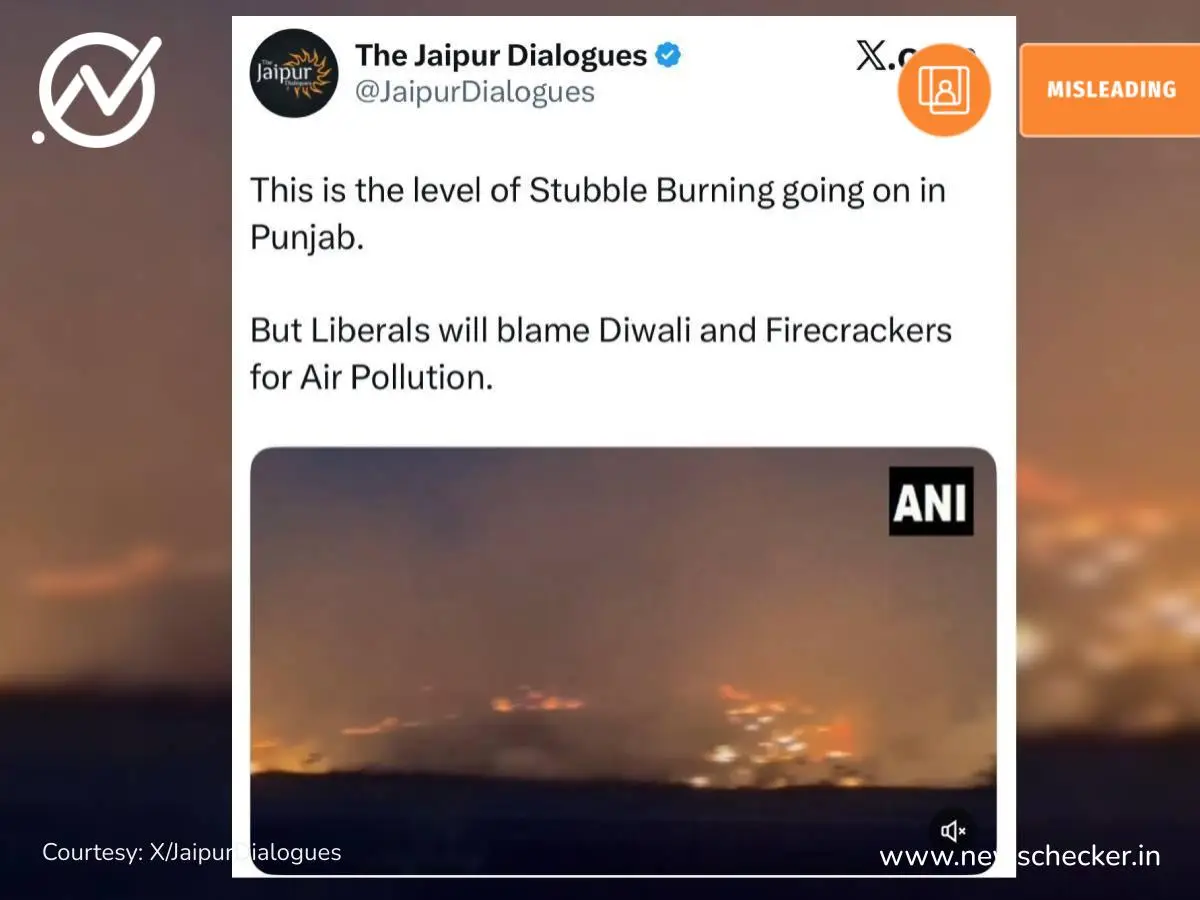
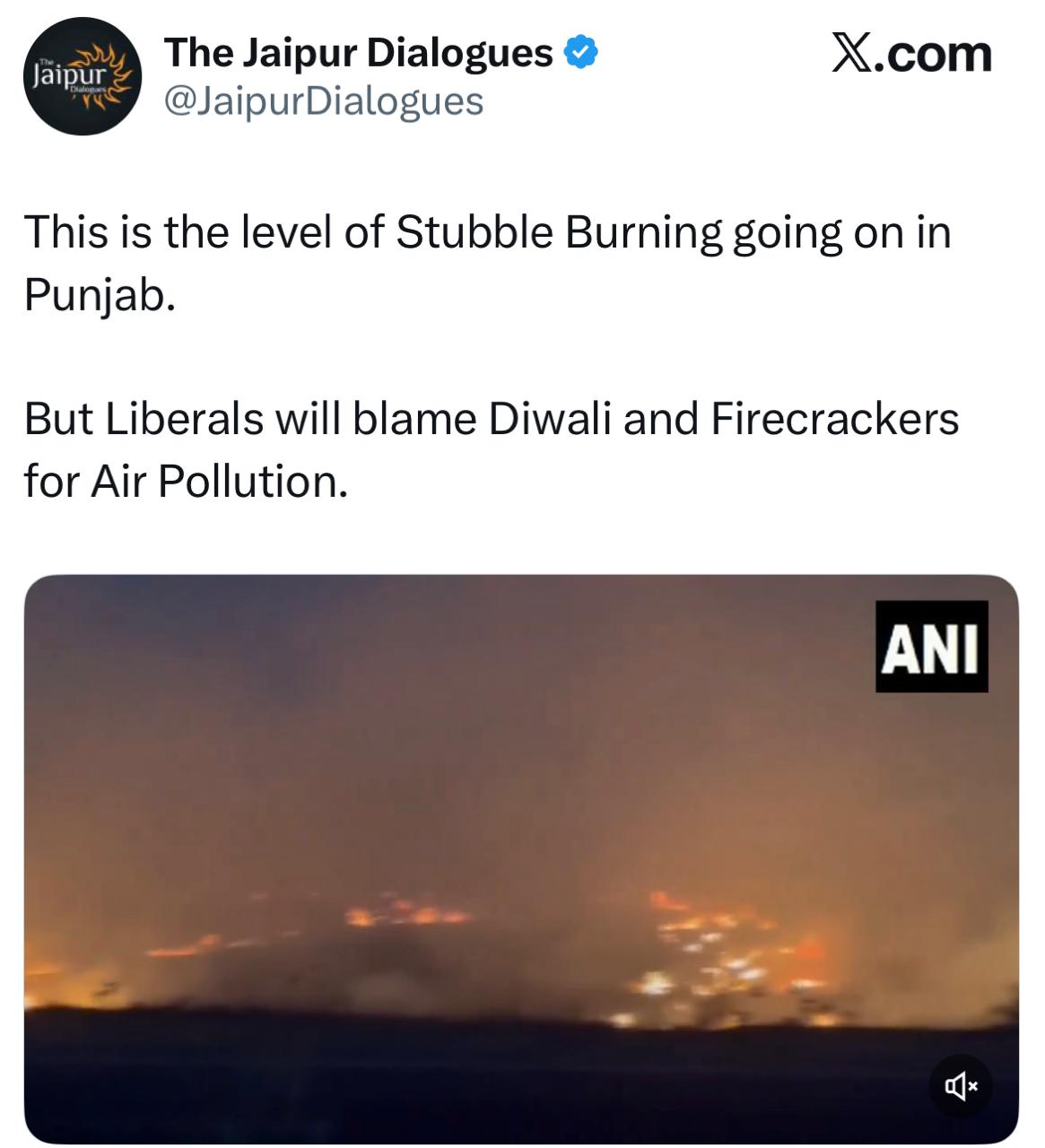
A video circulating on social media is claiming to show recent stubble burning in Punjab, implying it is responsible for the current spike in air pollution in Delhi.
Courtesy: X/JaipurDialogues
Evidence
Video Verification Using Google Lens
Keyframes from the viral video were analyzed using Google Lens, which led to a X post by news agency ANI dated November 1, 2024. According to the post, this video shows stubble burning in Dagaru village, Moga district, Punjab, confirming that the footage is not recent.
The same footage was also found on the YouTube channel News9 Live, uploaded on November 1, 2024, showing the similar visuals as the viral video. This further verifies that the video is nearly a year old.
Air Quality in Delhi Amid Diwali and Reduced Punjab Stubble Fires
Following Diwali, Delhi and the NCR experienced very poor air quality, with pollution levels several times above safe limits. The Supreme Court had relaxed the complete ban on firecrackers, allowing green crackers, which still contributed 30-40% of pollution.
At the same time, stubble burning in Punjab had decreased by 69% in 2025 compared to 2024. According to the Punjab Pollution Control Board, only 484 incidents were recorded by 22 October 2025, compared to 1,581 incidents during the same period in 2024.
Comparative Pollution Analysis
Times of India reports a study by consultancy Climate Trends, which shows that while stubble burning contributes to Delhi’s PM2.5 levels, it is not the only factor affecting air quality. The study noted that even with a 77.5% reduction in stubble burning in 2025, Delhi’s PM2.5 remained high due to emissions from firecrackers, traffic, industries, and dust.
News reports from 2024, including one by The Hindu on November 1, 2024, confirm that pollution levels in Delhi spiked significantly during the festival, far exceeding the WHO-prescribed safe limits.
UPDATE ON 24/10/2025: Air quality in Delhi on Friday (October 24, 2025) came down to the ‘poor’ category after it stood in the ‘very poor’ category for four days straight, standing at 293, days after Diwali celebrations in the national capital. The city’s 24-hour average air quality on Thursday (October 23) was recorded at 305 at 4pm in the ‘very poor’ category, making it the fourth most polluted city across India. Haryana’s Bahadurgarh, located on the borders of Delhi, was the most polluted city in India on October 23 with AQI levels at 325. (full dataset on Dataful here).
It is evidently clear that the video circulating as recent is actually from 2024, showing stubble burning in Punjab, but not linked to the current pollution levels in Delhi.
FAQ
1. Is this video from recent stubble burning in Punjab amid Delhi pollution? No. The viral video is from 2024, showing stubble burning in Dagaru village, Moga district, Punjab, and is not related to the current pollution in Delhi.
2. Is stubble burning in Punjab still causing high pollution in Delhi? Yes, but its impact in 2025 is lower than before. Firecrackers and other local sources also contribute significantly.
3. What are “green crackers” and do they reduce pollution? Green crackers are designed to emit less smoke and particulate matter than traditional firecrackers, but they still contribute partially to air pollution.
If you would like us to fact check a claim, give feedback or lodge a complaint WhatsApp us at +91-9999499044 or email us at checkthis@newschecker.in. You can also visit the Contact Us page and fill the form.